
Choosing a healthcare provider is personal, and patients know it. Written reviews still play a role, but more patients are looking for something that feels real before they book an appointment. Video testimonials tend to deliver that in a way text can't quite match. Here's why they're outperforming traditional reviews for healthcare practices.
Video Testimonials Often Build Trust
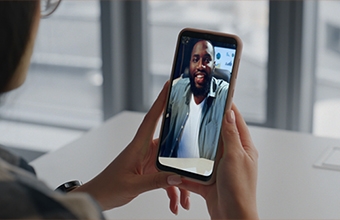
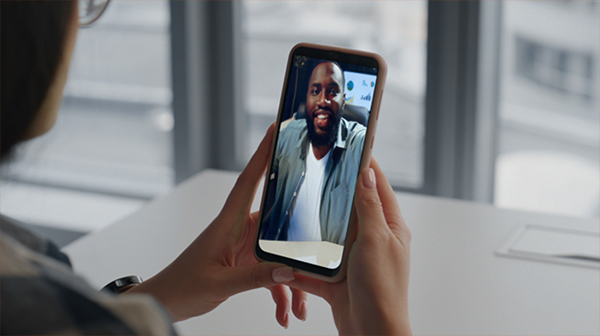
Written reviews are useful, but they can feel a little abstract, especially since it's not always clear who wrote them or whether they're real. Video removes that uncertainty. Seeing a real patient talk about their experience, their expressions, their tone, the small details they choose to share, tends to land differently than reading a few sentences of text.
That's not because video is inherently more persuasive. It's because it's harder to fake, and patients pick up on that. For someone deciding whether to book an appointment, hearing directly from someone who's already been through it can make the decision easier.
Higher Engagement Across Digital Platforms
Video content consistently generates higher engagement than text-based content across websites, social media platforms, and search results. Videos receive up to ten times more engagement than text posts across social channels, and social videos generate roughly 1,200 percent more shares than text and image content combined.¹ Visitors are more likely to stop scrolling and watch a short patient success story than read several paragraphs of written feedback. Healthcare practices that incorporate video testimonials on their websites often see visitors spend more time on key pages. Landing pages with embedded video have been shown to convert at up to 86 percent higher rates than text-only equivalents.² Longer engagement signals can also contribute to improved website performance and create additional opportunities to guide potential patients toward scheduling a consultation.
Video Testimonials Create Emotional Connections<
Healthcare decisions are often driven by emotions as much as facts. Patients want to know that others have faced similar challenges and achieved positive outcomes. A patient discussing how a procedure improved their quality of life or helped them return to activities they love creates a powerful emotional connection. These stories allow prospective patients to envision their own success, making video testimonials a valuable tool for influencing healthcare decision-making. Research consistently shows that video outperforms text in both comprehension and emotional engagement, which is particularly significant in a high-stakes decision environment like choosing a healthcare provider.³
Improved Local SEO and Online Visibility
Video testimonials can also support healthcare marketing efforts from an SEO perspective. Search engines increasingly prioritize rich media content, and videos can improve both user engagement and website performance metrics. SEO-optimized healthcare sites receive significantly more organic traffic than those without optimized content, with Google search accounting for 93 percent of healthcare discovery online.⁴ When properly optimized with relevant titles, descriptions, and transcripts, video testimonials can help healthcare practices rank for local search terms and attract more qualified traffic. They also provide fresh, unique content that can enhance a practice's overall digital presence.
More Shareable Than Written Reviews
Patients, staff members, and healthcare organizations are far more likely to share video content than text-based reviews. Short-form videos under 60 seconds generate 2.5 times more engagement per impression than any other content type, and marketers have ranked short-form video as the number one return-on-investment format for three consecutive years.⁵
A compelling patient story can be distributed across social media channels, email campaigns, landing pages, and even digital advertising campaigns. Including video in email marketing has been shown to increase click-through rates by 200 to 300 percent.⁶ This increased shareability expands the reach of a practice's reputation-building efforts and allows positive patient experiences to influence a broader audience.
How Video Testimonials Can Grow Your Practice
Growth in healthcare rarely comes down to one big move. It comes from small trust signals adding up until a prospective patient feels confident enough to book. Video testimonials are one of the more effective ways to build that trust quickly, giving prospective patients a chance to see and hear real experiences instead of just reading about them.
They also tend to keep visitors on your site longer, which search engines and AI tools read as a signal of quality and relevance. And a strong patient story doesn't have to live in one place. It can be repurposed across your website, social media, and paid ads, stretching the value of a single testimonial much further.
For practices looking to strengthen their online presence, video testimonials are a practical addition to an existing marketing strategy, not a replacement for it. Working with a team that understands healthcare can help make sure they're produced well, used effectively, and actually tied to results.
Frequently Asked Questions
Do video testimonials need patient consent?
Yes. Patients should sign a release form giving explicit permission for their story and likeness to be used in your marketing, including where it may be shared. This protects both the patient and the practice.
How long should a patient testimonial video be?
Most effective testimonials run one to two minutes. Long enough to tell a real story, short enough that people actually watch the whole thing.
Where should we publish video testimonials?
Your website is a good starting point, especially on service or procedure pages. From there, they can be repurposed for social media, email campaigns, and paid ads to get more use out of each one.
How do we find patients willing to be filmed?
Many practices ask at the point of a positive outcome, like the end of a successful treatment plan or a follow up visit where a patient expresses gratitude. Front desk and clinical staff are often in the best position to identify good candidates.
Does video testimonial content need to be professionally produced?
It helps, but it's not strictly required. What matters most is that the video looks and sounds credible, is well lit, clear audio, and feels genuine. A shaky or amateur video can undercut the trust you're trying to build.
Reference Links:
Holly Breen Olds brings more than 20 years of healthcare marketing expertise to every client relationship, with a career spent helping physicians, hospitals, and medical device companies across the US grow their visibility and connect with patients. Her deep understanding of the healthcare industry, paired with a sharp eye for evolving marketing strategy, has made her a trusted partner for organizations navigating an increasingly complex and competitive landscape.